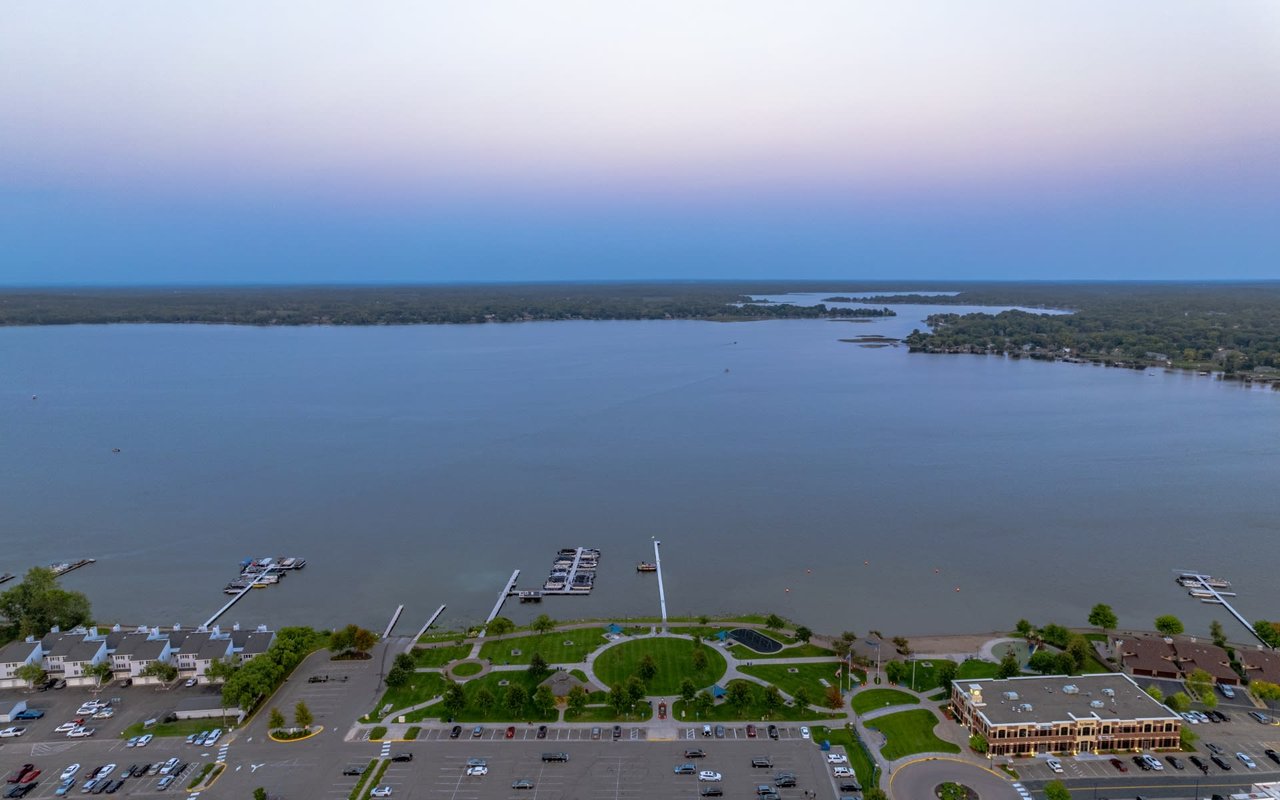
Picture two listings going live the same week in Forest Lake, half a mile apart. One sits inside the original city grid near downtown, connected to municipal water and sewer since the pipes went in decades ago. The other sits on what used to be Forest Lake Township before the city absorbed it in 2001, on a well and a septic system that predates the merger by twenty years. Both sellers assume the closing process looks the same. It doesn't, and the difference isn't cosmetic. It's a set of Washington County requirements that can add weeks to one closing and nothing at all to the other.
Most sellers don't find out which category they're in until an agent or a title company asks the question. By then, the timeline is already tight.
The Merger Nobody Mentions at the Closing Table
Forest Lake was incorporated in 1893 as a stop on the St. Paul and Duluth Railroad, and it stayed a modest lake town for most of its history before merging with the surrounding township in 2001. That merger didn't rebuild the infrastructure underneath every parcel. It just redrew a line on a map. The result is a city where, according to Forest Lake's own Water Department, most residents get water through the municipal system, while a meaningful share of properties still run on private wells that were never connected when the boundary changed.
Septic works the same way. Homes built or platted before the merger, especially on former township land near the lake's outer edges, are more likely to be running on individual systems than homes in the subdivisions built inside the original city limits.
None of this shows up on a listing photo. It shows up in county records, and it's the first thing that determines how your closing timeline is going to run.
What Washington County Actually Requires
Washington County, which handles septic and well permitting for Forest Lake, requires a compliance inspection whenever a property with a septic system changes hands. That's a county-level rule, not a statewide one. Scott County does not require a compliance inspection when a home is sold. Sellers who've moved within the metro before and remember a smoother process somewhere else aren't imagining things. The rules genuinely differ by county, and Forest Lake falls on the stricter side of that line.
The one exemption that can save a seller real time: if a compliant inspection has already been completed and filed with Washington County within the past three years, a new one isn't required. That three-year window is worth checking before you list, not after an offer comes in.
Here's how the two categories compare at closing:
| Requirement | City sewer and water homes | Private well and septic homes |
|---|---|---|
| Septic compliance inspection at sale | Not applicable | Required by Washington County unless a valid certificate is already on file |
| Standard state well disclosure certificate | Not applicable | Required under Minnesota law before signing a purchase agreement |
| Extra Washington County well disclosure | Not applicable | Required under Minnesota Statutes, section 103I.236, in addition to the standard state disclosure |
| Typical added cost | None | Inspection generally runs a few hundred dollars, depending on system access and complexity |
| Typical added lead time | None | Best scheduled weeks before listing, not after an accepted offer |
The Layer Most Sellers Don't Know Exists
Every home sale in Minnesota that involves a well triggers a state well disclosure certificate. That part is uniform. What's not uniform is that Washington County has its own additional statute on top of it. Before signing a purchase agreement, a seller whose home isn't on municipal water has to state in writing whether the property sits inside a state-designated special well construction area, a status tracked by the Minnesota Department of Health for specific zones across the county. Past designations have covered areas like Baytown and West Lakeland Townships near Bayport and Lake Elmo. Whether a given Forest Lake parcel falls inside a designated zone isn't something you can determine by looking at a plat map. It requires checking the county and state records directly, and it's a step that generic national closing checklists never mention because most counties don't have it.
This is the part that catches experienced sellers off guard the most. They've sold homes before. They know about well disclosure in general. They don't know Washington County added a second requirement on top of the state's, and they find out from a title company two weeks before closing instead of from their agent three months before listing.
Why the Boundary Keeps Moving
The line between sewered and unsewered land in Forest Lake isn't fixed. In 2026, the Metropolitan Council has been working on rehabilitating an aging sanitary sewer interceptor running between Fenway Avenue and Highway 61, from Headwaters Parkway to 180th Street North, along with electrical upgrades at three lift stations serving Forest Lake and Hugo. That's active infrastructure work, not historical trivia. It means the practical answer to "is this parcel on city sewer" can shift over a longer horizon than most sellers expect, and it's one more reason to verify current status with the city rather than relying on what a neighbor's house did five years ago.
How This Plays Out on a Real Timeline
Say a seller lists a home on a former township parcel in June, assuming the process runs like a standard sale. An offer comes in fast, inspection period starts, and only then does the buyer's agent ask for the septic compliance certificate. If there's no certificate on file from the last three years, the seller now needs to schedule a licensed inspector, wait for the report, and possibly negotiate repairs or a price adjustment, all inside a purchase agreement timeline that wasn't built to accommodate it.
Run the same sale with the inspection completed before listing, certificate in hand, and the well disclosure paperwork already filled out correctly for Washington County's additional requirement. The buyer sees a clean file on day one. Nothing about the price changes. The timeline does.
A few questions worth answering before you list a well or septic property in Forest Lake:
- Has a compliance inspection been filed with Washington County in the last three years, or does the system need one now?
- Does the property fall within a designated special well construction area, and has that been checked with current county and state records rather than assumed?
- Is the home fully on private systems, or does it use municipal water with a septic system, or vice versa? Mixed setups exist and each piece has its own rule.
- If the system needs work, is there time to schedule it before going live, rather than during an active purchase agreement?
Working With The Muske Team
This is the kind of detail that separates a smooth Forest Lake closing from a stressful one, and it's exactly where local, transaction-level knowledge matters more than a generic seller's checklist. The Muske Team has spent years working lakefront and acreage transactions across Forest Lake and the surrounding lake communities, where private wells, septic systems, and county-specific paperwork are part of nearly every deal. Knowing which category your home falls into, and getting the right documents in hand before you list, is part of how a full-service listing process actually earns its name.
If you're weighing a sale in Forest Lake and aren't sure whether your property is on municipal service or private systems, The Muske Team can help you sort that out early, before it becomes a closing-week surprise. Get your free home valuation and a straight answer on what your specific property will need.
FAQ
Does every home in Forest Lake need a septic inspection to sell? No. Only properties with a septic system are subject to Washington County's point-of-sale compliance inspection requirement. Homes fully connected to municipal sewer aren't affected.
Does an existing septic compliance certificate mean I need a new inspection? No. Under Washington County's stated exemption policy, a new inspection generally isn't required when a valid certificate already exists.
Is the extra well disclosure requirement unique to Washington County? Yes. The baseline well disclosure certificate applies statewide under Minnesota law, but the additional written disclosure about special well construction areas is a Washington County specific requirement layered on top of it.
Can I find out now whether my property is in a designated well construction area? Yes, current designations are maintained by the Minnesota Department of Health, and it's worth confirming directly rather than assuming based on a neighboring property's status.
This article is general information, not legal, tax or financial advice. Consult a qualified professional about your situation.